
Hardwood Stair Refinishing: When to DIY and When to Hire a Pro
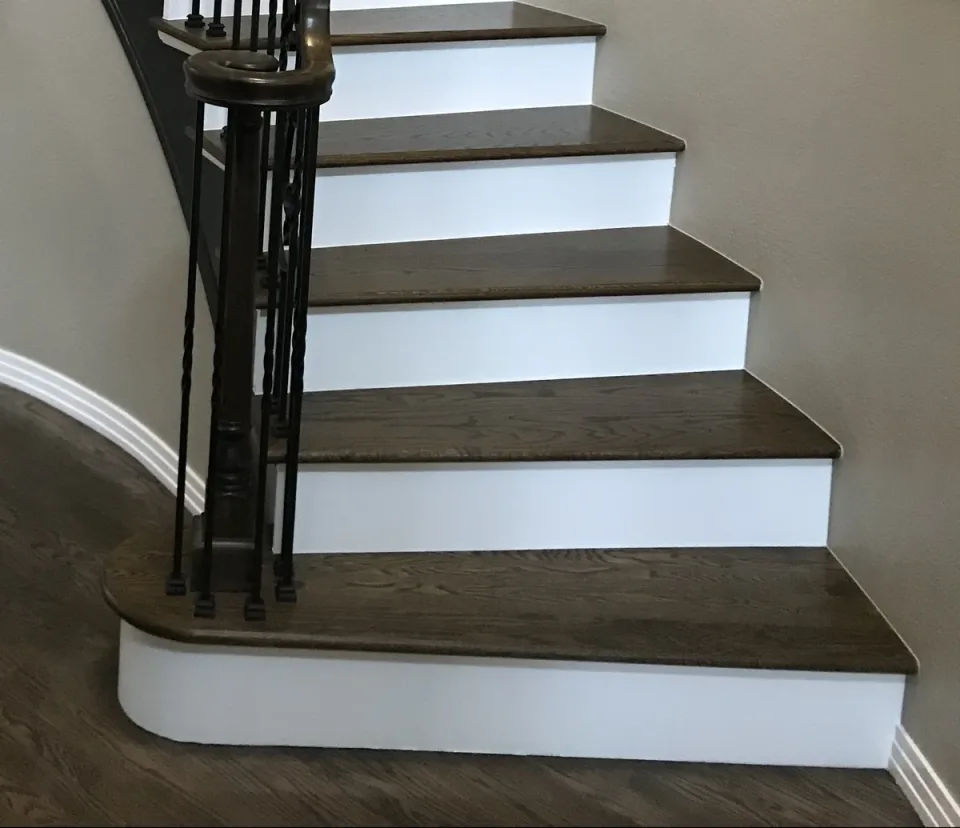
A staircase gets more foot traffic per square foot than almost any other surface in a home, which is why its finish often wears out before the floors around it. If the treads are structurally sound, hardwood stair refinishing can restore the surface without replacing the staircase. Refinishing stairs is not the same project as refinishing a floor: the treads, risers, and handrail each wear differently, and the tight angles make the work harder to do evenly. Here is how to tell when your stairs need attention, what the process involves, and when it makes sense to call Aspen Floor & Home Services instead of doing it yourself.
Signs Your Hardwood Stairs Need Refinishing
Worn, dull patches on the center of each tread, where feet land every time someone goes up or down.
Scratches or gouges from moving furniture, pet claws, or shoes with hard soles.
A color that no longer matches the hardwood floor at the top or bottom of the stairs.
A rough or slightly splintering surface on one or more treads, instead of a smooth finish.
A handrail that looks duller or stickier than the rest of the staircase from years of hands sliding over it.
A single gouge can sometimes be repaired locally, while widespread wear across several treads usually calls for refinishing. Learn more about repairing gouges in hardwood before deciding on a full project.
Any one of these is a cosmetic issue. If a tread feels loose, bounces underfoot, or makes a cracking sound, that is a structural problem, not a finish problem. In that case, start with hardwood floor repair before considering refinishing.
What Refinishing Hardwood Stairs Involves
A staircase has three different surfaces made from the same wood, and each one wears and refinishes differently.
Treads
The horizontal part of each step takes all the foot traffic and shows wear first. Treads are sanded down to bare wood, the same as a hardwood floor, then stained and finished. Because each tread is a small, separate piece of wood, getting an even sand across all of them takes more care than sanding one continuous floor.
Risers
The vertical face of each step sees no foot traffic, so risers often need only a light sand and a fresh coat rather than a full strip to bare wood, unless they are scuffed or scratched.
Handrail
Years of hands sliding over a handrail wear the finish in a different pattern than the treads, usually leaving it duller rather than scratched. Handrails are typically refinished separately from the treads and risers, since the wood, the shape, and the amount of wear are all different.
If the existing railing is outdated or no longer fits the style of the staircase, refinishing may be paired with a railing update. Aspen builds and refinishes custom wood staircases for Denver-area homes, and homeowners can also review the different types of stair railings when considering style, safety, and materials.
DIY vs. Hiring a Pro: What to Weigh
A staircase is one of the harder refinishing projects to take on without experience, for a few specific reasons.
Odd angles and tread nosing (the rounded front edge of each step) are hard to sand evenly with a handheld sander, and uneven sanding shows immediately once stain is applied.
Stairs are usually the main path between floors, so a multi-day project affects daily life more than refinishing a bedroom or a spare room would.
Matching the stain color across many small, separate pieces of wood is harder than staining one open floor, especially where the stairs meet the hardwood floor at the top or bottom.
An open stairwell can be awkward to ventilate during sanding and staining, and an unfinished, sanded staircase is a safety concern until the project is done.
A small touch-up on a single scuffed tread is a reasonable DIY project for someone comfortable with wood finishing. A full refinish of the staircase, or any color matching to the floors around it, is what most homeowners call a professional.
The right approach also depends on whether the finish only needs a refresh or a complete sand-and-refinish. This guide to screening versus full hardwood floor refinishing explains the difference.
Matching the Stain to the Floors Around Your Stairs
A staircase finished in a different tone than the floor it connects to is one of the most noticeable mismatches in a home, because the eye follows the stairs from one level to the next. Aspen Floor & Home Services tests stain samples on the actual stairs before a full application, using the same color-matching process used for hardwood floor refinishing, so the staircase reads as a continuous part of the floor rather than a separate piece of work.
For stairs currently covered in carpet, removing the carpet can reveal whether the existing treads can be refinished or need replacement. This comparison of hardwood versus carpet for Denver homes can help frame the broader decision.
FAQS
How do I know if my stairs need refinishing or just a repair?
A dull or scratched finish is a refinishing issue. A tread that feels loose, bounces, or makes a cracking sound is a structural issue and should be repaired first. Aspen Floor & Home Services checks the stairs before recommending refinishing, repair, or both.
Can hardwood stairs be refinished without replacing the treads?
In many cases, yes. If the tread wood is solid and thick enough to sand, the existing treads can be sanded and refinished rather than replaced. Treads with deep cracks, rot, water damage, or insufficient wood remaining after sanding usually need replacement. Aspen evaluates each staircase before recommending refinishing, tread replacement, or both.
How do stairs stay usable while they’re being refinished?
Professionals often work in alternating sections, sanding and finishing every other tread while the rest stay usable with caution, then switching once that side cures. This keeps a staircase partly open instead of closing it off completely for several days. Ask Aspen Floor & Home Services whether this approach fits your staircase.
Can refinishing change the color of hardwood stairs?
Yes. Once the existing finish is removed, the treads can be stained in a lighter or darker tone. The final color depends on the wood species, grain, age, and how the wood absorbs stain, so the same stain can look slightly different on stairs than it does on an adjoining floor. Aspen tests stain samples on the actual stair material before applying a full finish.
Can a handrail be refinished without redoing the entire staircase?
Often, yes. A handrail can be sanded, stained, and sealed on its own when the treads and risers are still in good condition. This is common when the railing looks dull or sticky from daily use while the steps still have a sound finish. Aspen evaluates the railing separately to determine whether refinishing, repair, or replacement makes the most sense.
Request a Free Estimate for Your Stairs
Not sure if your staircase needs a touch-up or a full refinish? Aspen Floor & Home Services will take a look and tell you honestly which one it needs. Whether the project involves restoring existing treads or updating a custom wood staircase, we will recommend the approach that fits the condition of your stairs.
Get My Free Estimate
(720) 320-5873