
Types of Stair Railings: Style, Safety, and Materials
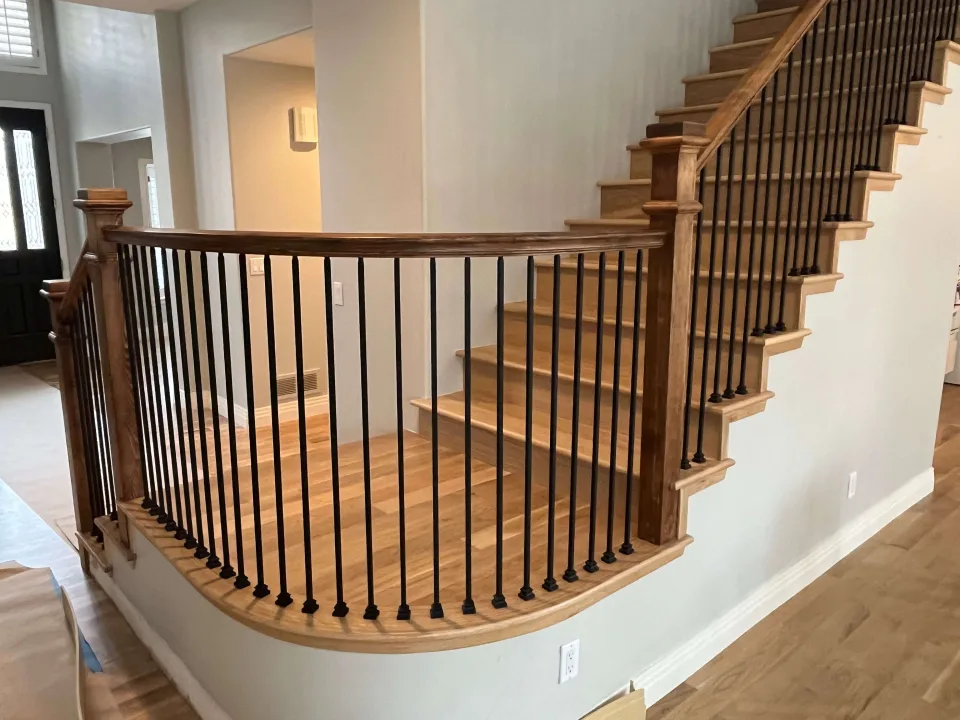
A stair railing improves safety while shaping the look of a home’s entryway. The right choice depends on the staircase design, surrounding floors, maintenance expectations, budget, and whether the project involves replacing a railing or remodeling the entire staircase.
At Aspen Floor & Home Services, we work with Denver-area homeowners who want to update outdated stair railings, replace worn components, or create a completely new staircase design. Common interior options include wood stair railings, iron balusters, and mixed wood-and-iron systems. Glass, cable, aluminum, and stainless steel may also work in specific interior or exterior applications.
Our Stair Railing Experience
Aspen Floor & Home Services has more than 20 years of experience working with hardwood floors, custom wood staircases, stair treads, handrails, and railing systems throughout the Denver metro area. Because staircases connect directly to surrounding floors and entryways, we evaluate the complete system instead of treating the railing as an isolated feature.
Depending on the condition of the staircase, a project may include:
Handrail replacement or installation.
Wood spindle or iron baluster replacement.
Newel post installation.
Stair tread and riser updates.
Wood staircase design and installation.
Refinishing and finish coordination.
Railing updates that match existing hardwood floors.
Our goal is to recommend the right scope of work for the staircase—not to replace components that are still structurally sound.
What Makes Up a Stair Railing
A stair railing is really three parts working together, and each one can be built in a different material.
Handrail: the top piece a hand actually grips, usually running at a consistent height along the stairs.
Balusters or spindles: the vertical pieces between the handrail and the treads, spaced closely together for safety.
Newel posts: the larger, sturdier posts that anchor the railing at the top, the bottom, and anywhere the staircase turns.
A railing replacement may involve only the handrail or balusters. A staircase remodel may also include newel posts, treads, risers, finishes, and structural adjustments.
Comparing Stair Railing Materials and Styles
Wood stair railings are a popular choice for warm and traditional interiors because they can coordinate with hardwood floors and provide a comfortable handrail. When the existing wood railing is structurally sound but the surface looks worn, hardwood stair refinishing may restore the color and finish without replacing the entire staircase.
Iron balusters, mixed wood-and-iron systems, glass, cable, aluminum, and stainless steel offer different combinations of style, maintenance, visibility, and durability. The cards below compare the most important factors to consider before choosing a railing system.
Railing Materials at a Glance
The table then follows:
Railing type | Best for | Style | Safety considerations | Maintenance | Durability | Relative cost |
Wood railing | Traditional and transitional interiors | Warm, classic, and customizable | Provides a comfortable handrail; baluster spacing and secure attachment must be properly designed. | Medium; may need refinishing | Good with proper care | Low to medium |
Iron balusters | Interior staircase updates | Traditional, transitional, or modern | Strong vertical infill; spacing must prevent unsafe openings; handrail must be securely anchored. | Low | High | Medium |
Wrought iron railing | Decorative or custom metal designs | Ornamental, classic or formal | Durable when properly fabricated and anchored; the design must avoid unsafe openings or climbable patterns. | Low to medium | High | Medium to high |
Glass railing | Contemporary homes and open interiors | Minimalist and modern | Provides a visual barrier when properly engineered; glass, hardware, and edges require professional installation. | Medium; fingerprints and spots are visible. | High when properly installed | High |
Cable railing | Modern interiors, decks, and open views | Contemporary and minimalist | Cable spacing, tension, and post connections are critical; installation must meet applicable requirements. | Low to medium; cables may need adjustment. | High with proper installation | Medium to high |
Stainless steel railing | Modern interior or exterior applications | Sleek and industrial | Strong when properly anchored; handrail shape, height, and infill spacing still matter. | Low | Very high | Medium to high |
Safety depends on the complete railing system, not only on the material. A properly installed stair railing should include a secure and graspable handrail, appropriate guard protection, safe baluster or infill spacing, and structural attachments designed for normal use.
The relative cost in this table is a general comparison, not a project quote. Final pricing depends on staircase length, number of posts, curves, material, finish, removal work, structural repairs, and installation complexity.
Which Railing Is Right for Your Home?
1. Choose a wood railing if warmth, traditional styling, and a coordinated finish are the priorities.
2. Choose iron balusters if the goal is a more open sightline and a more updated appearance.
3. Choose a mixed wood-and-iron railing if the staircase needs the comfort of a wood handrail with contemporary metal infill.
4. Choose glass or cable railing when preserving light and visibility matters more than minimizing the initial investment.
A future guide to stair railing installation costs in Denver can help homeowners compare project scope and budget once that page is published.
Consider a complete staircase installation when the treads, risers, handrail, newel posts, and balusters all need to be updated.
How We Evaluate a Stair Railing Project
Before recommending a material or style, we evaluate several parts of the staircase:
Existing structure: Whether the stairs, treads, and risers are stable and in usable condition.
Railing components: Whether the handrail, newel posts, and balusters can be repaired, refinished, or replaced.
Floor coordination: Whether the wood species, stain, and finish should match nearby hardwood flooring.
Design direction: Whether the home calls for a traditional, transitional, or modern railing.
Safety and installation: Whether the handrail, infill, posts, and attachment points are appropriate for the staircase configuration.
Project scope: Whether the work is a railing update, baluster replacement, or complete custom staircase installation.
This evaluation helps us determine whether a homeowner needs a simple railing replacement, an iron baluster update, or a broader staircase remodel.
Should You Replace the Railing or the Entire Staircase?
Replacing only the railing may be appropriate when the existing staircase is structurally sound and the primary issue is style, wear, or outdated components.
A railing update may include:
Replacing wood spindles with iron balusters.
Installing a new handrail.
Replacing newel posts.
Refinishing existing wood components.
Updating the railing finish or color.
A more complete staircase installation may be appropriate when several components need attention. Signs that a larger project may be needed include damaged treads, worn risers, inconsistent components, structural movement, or a staircase that no longer coordinates with the surrounding flooring.
If the handrail, balusters, treads, and risers all need to be updated, replacing one component at a time may create an inconsistent result. In that situation, a custom wood staircase installation can provide a more cohesive design.
FAQ
What is the difference between a baluster and a spindle?
The terms are often used interchangeably for the vertical pieces installed between a handrail and the stair treads. “Spindle” is commonly associated with wood components, while “baluster” is often used for iron or metal components. Both are part of the staircase railing system.
Can iron balusters be added to an existing wood staircase?
Yes, iron balusters can often replace existing wood spindles without rebuilding the entire staircase. Aspen evaluates the handrail, newel posts, treads, and attachment points first to determine whether the existing structure can support a baluster replacement or whether a broader staircase update is needed.
Which is more durable, wood or iron stair railing?
Iron balusters generally resist dents and surface wear better than wood spindles, while wood handrails and newel posts can provide excellent long-term performance when properly finished. We evaluate expected use, existing materials, and maintenance preferences before recommending a railing system.
Does a stair railing need to match the floor?
A railing does not have to match the floor exactly. However, coordinating the wood tone, stain color, or metal finish with the surrounding flooring can make the staircase look more intentional. Mixed wood-and-iron systems can add contrast while still connecting the staircase to the rest of the home.
What makes a stair railing safe?
A safe stair railing should include a graspable handrail, secure structural connections, appropriate guard protection, and infill spacing that prevents unsafe openings. The railing should also be installed at the correct height for the staircase and property type. Material alone does not determine safety; design, installation quality and local requirements are equally important.
Are iron balusters safer than wood spindles?
Neither material is automatically safer. Both can provide safe infill when properly spaced, securely attached, and combined with a correctly installed handrail. Iron balusters may offer greater resistance to dents and wear, while wood spindles provide a traditional appearance and comfortable visual weight.
How do I choose between a railing replacement and a custom staircase?
We recommend looking at the complete staircase before deciding. A railing replacement may be enough when the treads, risers, and structure are sound. A custom staircase may be more appropriate when multiple components are damaged, outdated, or difficult to coordinate with the surrounding hardwood floors.
What stair railing materials does Aspen install?
Aspen Floor & Home Services, we install and work with wood, wrought iron, aluminum, stainless steel and combined railing options, depending on the project requirements. The available materials, finish and installation method depend on the staircase design and the condition of the existing components.
Request a Free Stair Railing Estimate
Not sure whether wood, iron, or a combination of both is right for your staircase? We can evaluate the existing stairs and recommend an appropriate railing or staircase solution for your Denver-area home.
Request a free estimate for your stair railing or custom staircase or call (720) 320-5873.