
Hardwood vs. Carpet: Which is Better for Denver Homes?
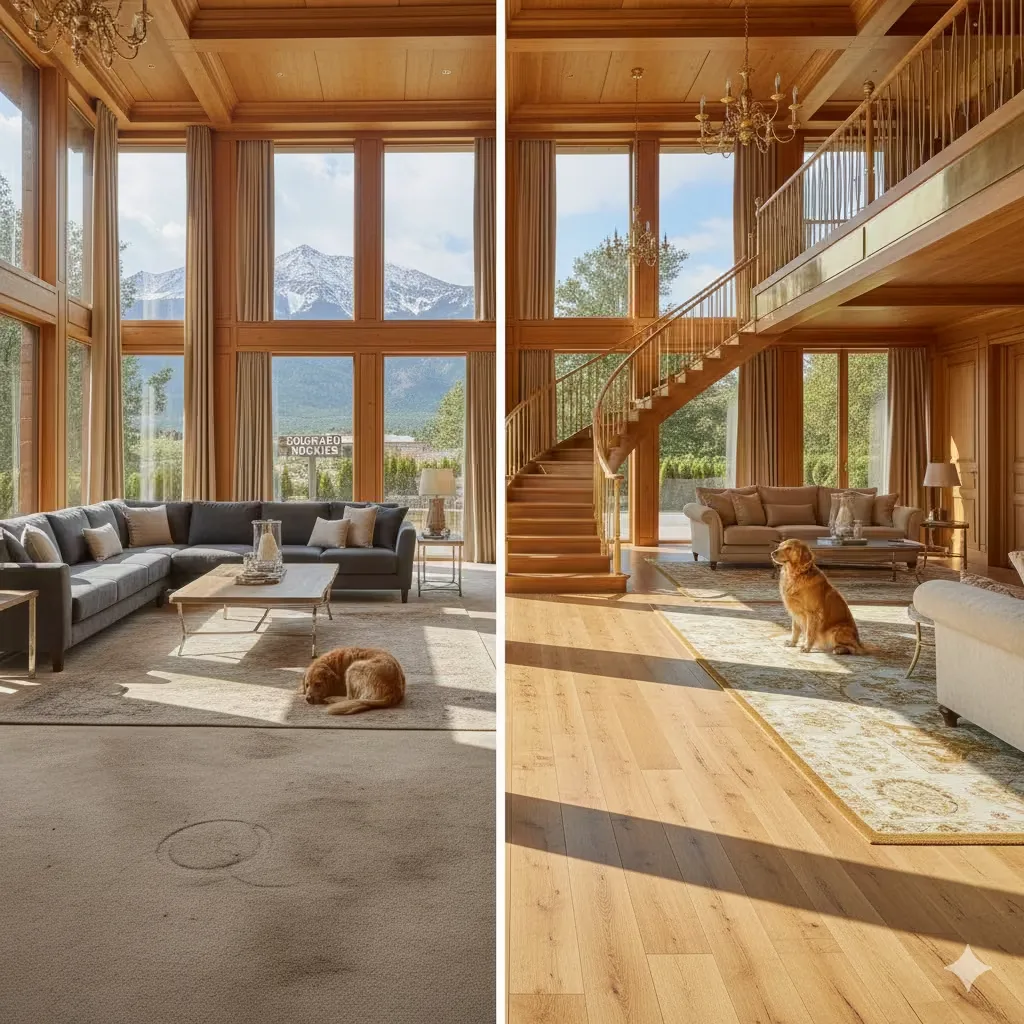
Choosing between hardwood floors and carpet represents one of the most significant decisions Denver homeowners face during renovations. Hardwood floors typically cost more upfront but offer superior longevity and resale value , while carpet provides immediate comfort and warmth—a consideration in Colorado’s harsh winters. This comparison examines both options through the lens of our unique climate, lifestyle needs, and long-term investment potential across Cherry Hills Village, Highlands Ranch, and throughout the Denver Metro Area.
Is it better to have hardwood floors or carpet in the Colorado climate?
For Colorado’s distinctive climate conditions, hardwood floors generally outperform carpet by withstanding our dry air, temperature fluctuations, and seasonal challenges more effectively.
Our region’s environmental factors create unique flooring demands. With humidity levels dropping to 15-20% during winter months, hardwood floors expand and contract predictably when properly installed and maintained. Quality hardwood installations accommodate these seasonal movements through appropriate acclimation and expansion gaps—something experienced Denver contractors understand intimately. In cities like Highlands Ranch and Cherry Hills Village , many homeowners opt for a hybrid approach—installing hardwood in high-traffic living areas and saving carpet for cozy bedrooms.
Carpet faces different challenges in our climate:
- Moisture tracking : Snow, slush, and ice melt tracked indoors can saturate carpet fibers, creating breeding grounds for mold in our dry climate, where homeowners often underestimate moisture retention
- Salt and debris : Road treatments and de-icing compounds penetrate carpet deeply, accelerating wear patterns around entry points
- Static electricity : Colorado’s low humidity makes carpet notorious for generating static shocks, particularly during the winter months
- Dust accumulation : Our high-altitude environment and frequent sunny days mean more UV exposure and airborne particles that settle into carpet fibers
Hardwood surfaces handle these conditions more gracefully. They’re easy to clean after tracking in snow, don’t trap road salt, and can be refinished to restore their appearance—an advantage particularly valuable in high-traffic South Denver communities where active outdoor lifestyles are the norm.
Is hardwood or carpet better for allergies in Denver?
Hardwood floors are definitely better for allergy sufferers in Denver because they don’t trap pollen, dust mites, or pet dander that aggravate respiratory issues.
Denver’s allergy season runs from February through October, with tree pollen peaking in spring and ragweed dominating fall months. Modern homes in Highlands Ranch and Cherry Hills Village increasingly feature hardwood specifically to maintain indoor air quality when outdoor allergen counts soar.

The science is clear: carpet fibers trap allergens that vacuuming alone cannot fully remove. Even HEPA-filter vacuums capture only 80-85% of embedded particles, leaving significant allergen reservoirs within carpet backing and padding. Hardwood surfaces eliminate these hiding places—regular sweeping or microfiber mopping removes allergens rather than redistributing them.
For families managing asthma or seasonal allergies, hardwood floors paired with area rugs offer the best compromise . Rugs provide warmth and comfort in specific zones while being removable for thorough cleaning or professional treatment during high-pollen seasons.
Cost and Maintenance in South Denver Communities
Understanding the financial commitment for either flooring option requires looking beyond installation costs to lifetime value—a calculation that shifts significantly in Cherry Hills Village and similar premium markets where home values and buyer expectations run higher.
How much more expensive is hardwood than carpet in the Denver Area?
Hardwood flooring costs approximately 2-4 times more than carpet for initial installation, with quality hardwood ranging from $8-15 per square foot installed compared to carpet at $3-7 per square foot in the Denver Metro Area.
This pricing gap reflects several local factors:
- Material costs : Hardwood prices vary based on species, grade, and width, with red oak and white oak being the most popular in Colorado homes. Exotic species command premium pricing
- Labor rates : Denver’s skilled hardwood installers charge $4-8 per square foot, depending on complexity, while carpet installation runs $1-3 per square foot
- Subfloor preparation : Many South Metro homes built on concrete slabs require moisture barriers and leveling compounds before hardwood installation, adding $2-3 per square foot
However, this initial cost difference tells only part of the story. Carpet typically requires replacement every 7-10 years in high-traffic areas , while properly maintained hardwood floors can last 50-100 years—a compelling argument for homeowners planning to stay in their Highlands Ranch or Greenwood Village properties long-term.
Is it cheaper to install carpet or hardwood floors for a full home renovation?
Carpet installation is cheaper initially, but hardwood becomes more cost-effective over time when factoring in replacement cycles and property value enhancement.
For a 2,000-square-foot Denver Metro home renovation:
| Cost Factor | Carpet | Hardwood |
| Initial Installation | $6,000-14,000 | $16,000-30,000 |
| Expected Lifespan | 7-10 years | 50-100 years |
| Replacement Costs (30 years) | $18,000-42,000 (3 replacements) | $2,000-5,000 (refinishing 2x) |
| Maintenance (annually) | $200-400 (deep cleaning) | $100-200 (cleaning, touch-ups) |
| Impact on Home Value | Neutral to slight negative | +3-5% property value |
The lifetime cost comparison decisively favors hardwood for homeowners planning to remain in their properties beyond 10 years. Even accounting for the higher upfront investment, hardwood’s longevity and low maintenance requirements result in lower total ownership costs.
For full-home renovations in premium Denver suburbs, consider this strategic approach: install hardwood in main living areas and primary bedroom, then use high-quality carpet in secondary bedrooms. This hybrid strategy balances initial costs while maximizing long-term value and comfort.
Confused about which flooring investment makes sense for your Cherry Hills Village or Highlands Ranch home? Schedule your free in-home flooring consultation and get a detailed cost breakdown tailored to your specific project—no pressure, just expert guidance from Colorado flooring specialists who understand your local market.
Room-by-Room: Flooring Trends for Highlands Ranch Homes
Denver Metro families increasingly take customized approaches to flooring, selecting surface materials based on each room’s specific function and traffic patterns. This strategic thinking reflects how active Colorado lifestyles impact different living spaces.
Carpet vs. hardwood in bedrooms: Staying warm in Colorado winters
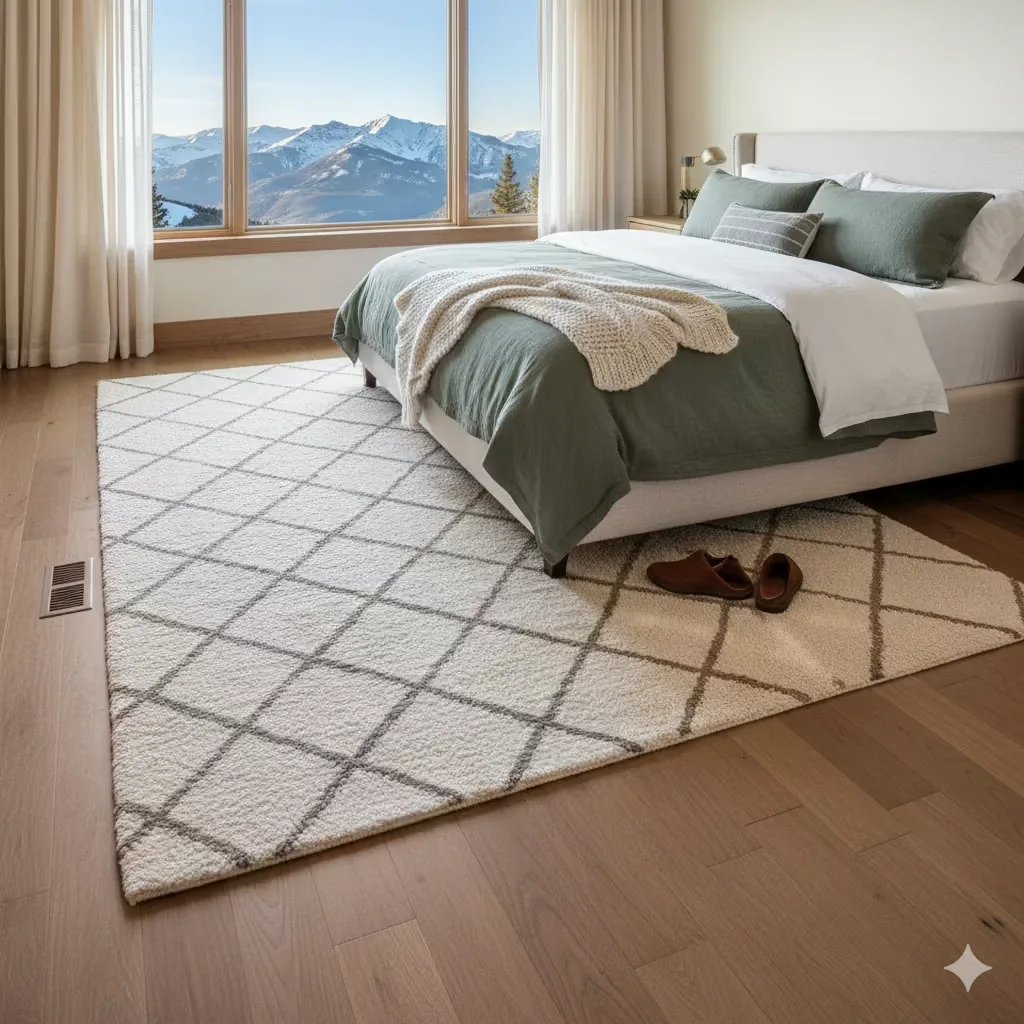
Carpet remains the preferred choice for bedrooms in Colorado due to superior insulation properties and comfort underfoot during cold mornings when temperatures can drop to single digits.
The thermal benefits of carpet matter significantly in Highlands Ranch, where average January lows hover around 15°F. Carpet provides an R-value of 1.0-2.0—modest but meaningful insulation that keeps bedroom floors warmer than hardwood’s near-zero R-value. For homeowners running forced-air heating systems, this translates to:
- Warmer surface temperatures (carpet feels 10-12°F warmer to bare feet)
- Reduced heating costs in rooms where occupants spend 7-8 hours nightly
- Acoustic dampening that creates quieter sleeping environments
- Slip resistance for early morning navigation
However, hardwood in primary bedrooms is gaining popularity in luxury Denver properties . Homeowners in Cherry Hills Village increasingly choose hardwood with high-quality area rugs, prioritizing allergen control and aesthetic continuity with adjoining spaces over thermal comfort. Radiant floor heating beneath hardwood eliminates the temperature disadvantage while maintaining hypoallergenic benefits.
Hardwood vs. carpet in the living room: Durability for active lifestyles
Hardwood floors are superior for living rooms in active Denver households due to their exceptional durability, easy maintenance, and ability to withstand pet traffic, furniture movement, and daily wear.
Colorado families embrace outdoor activities—hiking, skiing, biking—that translate into heavy foot traffic through living spaces. Hardwood handles this lifestyle effortlessly:
- Pet-friendly performance : Dogs’ nails won’t snag hardwood fibers, and accidents clean up completely without leaving stains or odors
- Furniture flexibility : Rearranging furniture for entertaining or seasonal changes doesn’t create permanent indentations like carpet
- Visual spaciousness : Hardwood’s continuous surface makes rooms appear larger—valuable in ranch-style homes common throughout South Denver
- Design versatility : Neutral hardwood tones complement Colorado’s popular interior styles, from mountain modern to contemporary farmhouse
The living room represents your home’s showcase space. Hardwood’s refined appearance signals quality to guests and future buyers , positioning your property competitively in Denver’s robust real estate market, where first impressions significantly impact sale timelines and final prices.
Is hardwood or carpet better for stairs?
Hardwood stairs offer superior durability and safety when properly finished with non-slip treatments, though carpet remains popular for families with young children or elderly residents concerned about fall risks.
This decision involves balancing practical safety considerations against long-term maintenance realities:
Hardwood stair advantages:
- Durability in high-traffic transition zones
- Easy cleaning of tracked-in snow and mud
- No carpet wear patterns on stair nosings
- Maintains the home’s cohesive design flow
- Can be refinished if damaged
Carpet stair advantages:
- Superior slip resistance, especially on straight runs
- Sound dampening between levels
- Softer impact surface if falls occur
- Lower upfront installation costs
Many Denver Metro homeowners solve this dilemma with carpet runners on hardwood stairs —securing removable carpet strips down stair centers while exposing hardwood on both sides. This approach provides slip resistance where needed while maintaining the hardwood’s aesthetic and allowing runner replacement without full stair renovation.
For families with young children, carpet makes sense temporarily. As children grow and safety concerns diminish, transitioning to hardwood or runners becomes a straightforward upgrade that enhances property value.
See how Denver Metro families are transforming their living spaces with dustless hardwood refinishing. Browse our Before & After gallery featuring real projects in Highlands Ranch, Greenwood Village, and Castle Rock—zero dust, zero stress, maximum wow factor.
Local Verdict: Which flooring adds more value to your Denver Metro property?
Hardwood flooring adds 3-5% to home values in the Denver Metro Area, with even stronger premiums in luxury markets like Cherry Hills Village and Highlands Ranch, where buyers expect hardwood as a standard feature.
Recent Denver real estate data reveals compelling patterns:
Homes with hardwood floors sell 15-20% faster than comparable properties with carpet throughout. This velocity advantage matters in competitive markets where timing impacts final sale prices. Buyers perceive hardwood as a premium feature that signals overall home quality and proper maintenance.
The return on investment calculation for Denver homeowners:
- Average home value boost : $15,000-25,000 on $500,000 properties
- Installation cost : $16,000-30,000 for whole-home hardwood
- Net ROI : 50-80% of installation costs recovered immediately, plus faster sale times
- Long-term appreciation : Hardwood maintains value while carpet depreciates to zero
Beyond raw numbers, hardwood eliminates a common buyer objection. Many Denver purchasers budget $5,000-10,000 to replace carpet immediately after closing —viewing it as the previous owners’ selection rather than a fresh, neutral starting point. Homes with hardwood floors avoid this psychological barrier, often receiving cleaner offers without carpet replacement contingencies.
In South Denver’s premium communities, hardwood isn’t merely an upgrade—it’s an expectation. Properties in Cherry Hills Village or Highlands Ranch with quality hardwood compete in entirely different buyer pools than those with carpet, attracting purchasers seeking move-in-ready luxury rather than renovation projects.
Frequently Asked Questions (FAQ)
Is carpet better than hardwood for soundproofing?
Yes, carpet provides superior sound dampening compared to hardwood, absorbing approximately 30-35% of ambient noise versus hardwood’s negligible sound absorption. This matters significantly in multi-story Denver homes where reducing sound transmission between levels improves livability. For optimal acoustic control, consider hardwood with high-quality underlayment padding in main living areas, reserving carpet for upper-level bedrooms.
Which flooring increases home resale value the most?
Hardwood flooring increases Denver Metro home resale values most significantly, typically adding 3-5% to property values while also accelerating sale timelines by 15-20%. Cherry Hills Village and Highlands Ranch markets show even stronger premiums, where buyers expect hardwood as a baseline feature. Carpet maintains value only when brand new and professionally installed, depreciating rapidly with wear.
Is hardwood more expensive to maintain than carpet?
No, hardwood maintenance costs less long-term than carpet despite requiring occasional refinishing. Annual hardwood maintenance ($100-200 for cleaning supplies and touch-ups) costs significantly less than carpet’s professional deep cleaning requirements ($200-400 annually). Over 30 years, hardwood requires 2-3 refinishing sessions ($2,000-5,000 total) while carpet demands 3-4 complete replacements ($18,000-42,000 total).
Your flooring choice impacts daily comfort, maintenance requirements, and long-term property value for decades. Denver Metro homeowners increasingly recognize that hardwood floors represent an investment in their home’s future , accommodating our unique climate while meeting buyer expectations in competitive real estate markets.
Consider your specific situation: How long do you plan to stay in your home? Do family members have allergy sensitivities? What’s your lifestyle—active with pets and children, or quieter with less wear? These factors should guide your decision more than cost alone.
Ready to increase your home’s value and eliminate carpet allergens before Colorado’s spring pollen season? Call 720-320-5873 now or request your free estimate for dustless hardwood floor refinishing in the Denver Metro Area. Limited slots available for February projects—our Cherry Hills Village and Highlands Ranch clients book 3-4 weeks in advance.