
Carpet to Hardwood Stairs: What to Expect in Denver
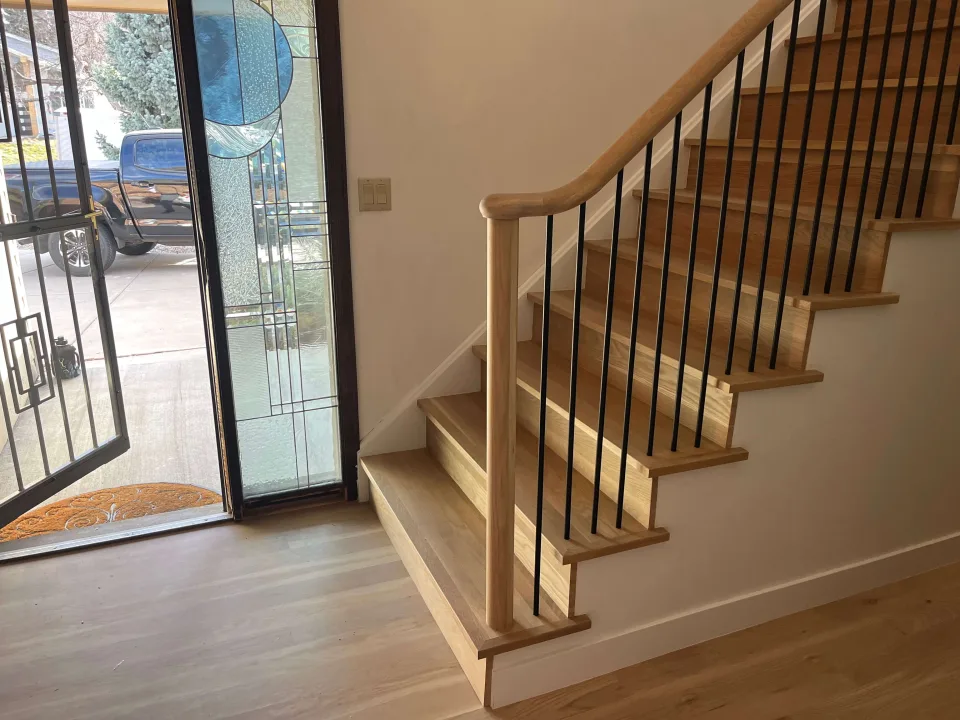
A carpet-to-hardwood stair conversion involves removing carpet, assessing the existing staircase, and repairing or replacing the treads—the horizontal surfaces you step on—as needed.
At Aspen Floor & Home Services, we help Denver-area homeowners determine what can stay and what needs replacement. This guide explains the conversion process, what affects the estimate, and how stair access and timing are handled.
The right approach starts with what is underneath the carpet—not just the finish you want. Here is what to expect when planning a stair conversion for your Denver-area home.
What Is Under Your Stair Carpet?
In our stair renovation work, we most often find a hardwood, plywood subfloor, or luxury vinyl plank (LVP) beneath the carpet. We confirm the material and its condition on site before deciding what can be repaired and what needs replacement.
Finding wood underneath does not automatically mean it is ready to sand and stain. The surface, supporting components, and previous modifications all need to be considered.
Existing Hardwood That Can Be Restored
Hardwood treads do not always need replacement. If the existing wood is suitable for restoration, repairs and refinishing may be enough.
We assess the damage and condition of the treads before recommending that approach. When the main issue is surface wear, hardwood stair refinishing may restore the appearance without replacing every step.
Loose or damaged components need attention before finish work begins.
Treads That Need Replacement
Some staircases need new hardwood treads to achieve the planned result. Plywood or another covering beneath the carpet should not be assumed to be a suitable finished walking surface.
Most of our conversions involve repair or full tread replacement.
We also repair or replace the risers—the vertical faces between steps—and the nosing, or front edge of each tread, as needed. These details help create a clean, consistent result.
What Does the Conversion Process Involve?
Each staircase is different, but our projects generally follow four stages:
Assess the staircase. We review the existing components, measure the areas involved, and discuss the appearance you want.
Remove carpet and confirm conditions. Once the carpet is removed, we assess the materials underneath and identify necessary preparation or repairs.
Repair or replace components. We address the treads, risers, and nosing according to their condition and the project scope.
Complete installation and finishing. We install the selected materials, coordinate transitions, and explain how the stairs can be used as the work progresses.
The assessment after carpet removal is important because concealed conditions can change the work required.
Coordinating Treads, Railings, and Hardwood Floors
A conversion does not automatically require a new handrail or balusters—the smaller upright pieces within the railing.
We keep existing railing components when they are solid and suitable for the project. Replacement may be needed when the system is loose or unsafe, requires changes to meet applicable building requirements, or is being updated for a more modern look.
The different types of stair railings can help define the design when railing changes are part of the conversion. A wood handrail with metal balusters creates a different appearance from an all-wood system.
The flooring at each landing matters too. Wood species, grain, and finish color influence how the staircase relates to the surrounding space.
We consider these elements together. A coordinated finish does not have to be an exact match, but the treads, risers, handrail, and nearby floors should look intentional.
What Affects Stair Conversion Costs in Denver?
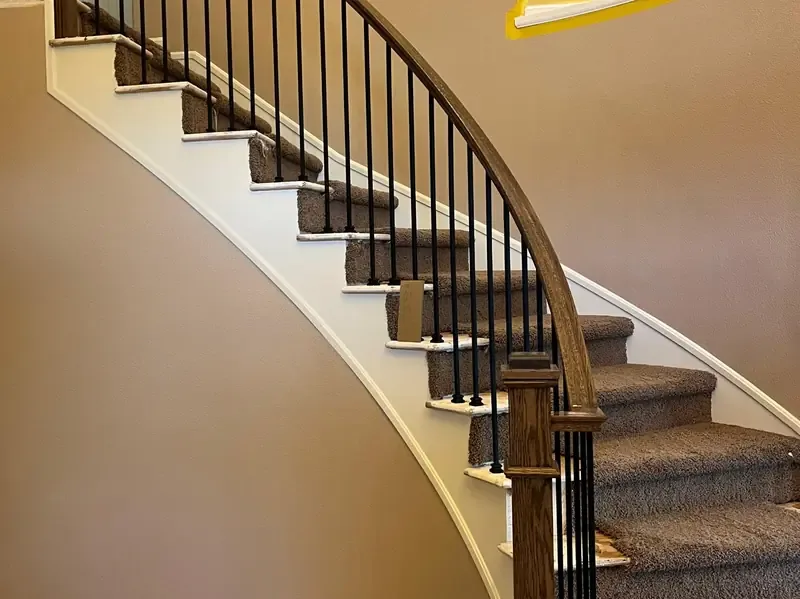
The number of steps is only one part of the budget. Two staircases with the same number of treads may require different preparation, materials, and installation work.
The main cost factors include:
Staircase size and layout, including turns and landings.
Repair versus replacement of existing components.
Material and finish selection.
Riser, nosing, and landing work.
Handrail or baluster changes.
Additional conditions revealed after carpet removal.
Our estimate includes an on-site consultation, measurements of all areas, a material list, a timeline, and a defined scope of work. It also addresses additional work that may need to be considered.
Before scheduling, ask how unexpected findings would affect the scope, price, and timeline, and how any changes would be documented. A clear estimate should help you understand the proposed work—not just provide a per-step price.
Access, Finishing, and Safety During the Project
Most of our stair conversion projects take 1–3 weeks, depending on size and scope. You keep access between floors during the project, with use coordinated around installation and finishing.
We explain temporary restrictions, so you know when and how the stairs can be used. Maintaining access does not mean every step is available at every stage.
Before work begins, tell us about bedrooms or bathrooms upstairs, children, pets, and any mobility concerns. These details help us plan around your household.
Installation completion and finish curing are separate considerations. Any restrictions on footwear, cleaning, or normal use depend on the selected materials and finish.
The conversion must also account for the completed staircase’s dimensions, nosing, landing transitions, and railing connections. Applicable building requirements should be confirmed for the property and scope; homes outside the City and County of Denver may fall under another municipality.
Carpet-to-Hardwood Stair Conversion FAQs
Does Aspen use retrofit treads?
Retrofit treads are designed to cover suitable existing steps rather than replace the entire tread. We use them only in limited cases where the existing structure makes them the better option. Most of our conversions involve repairing the existing treads or replacing them completely.
Can I choose prefinished or site-finished stairs?
Yes. We work with both options. Prefinished materials have their finish applied before installation, while site-finished materials are finished as part of the work in your home. We recommend an approach based on your staircase, preferred appearance, and timeline.
What should I discuss during the on-site consultation?
Tell us whether you want to update only the carpeted steps or include the railing and surrounding finishes. Mention visible damage, access needs, and the appearance you want. This helps us define the work involved and prepare a scope that reflects your goals.
Can I see completed stair renovation projects?
Yes. We can share completed stair projects so you can review examples of our work and discuss the result you want. Before-and-after photos can help illustrate the difference between restoring existing components and replacing them.
Plan Your Stair Conversion with Aspen
Whether your stairs need restoration, new treads, or a broader remodel, we start by defining the appropriate scope.
Our custom wood staircase installation services allow treads, handrails, balusters, and finishes to be planned together.
Request a free stair conversion consultation or call (720) 320-5873.