
The Benefits of Dustless Hardwood Floor Refinishing: A Complete Guide
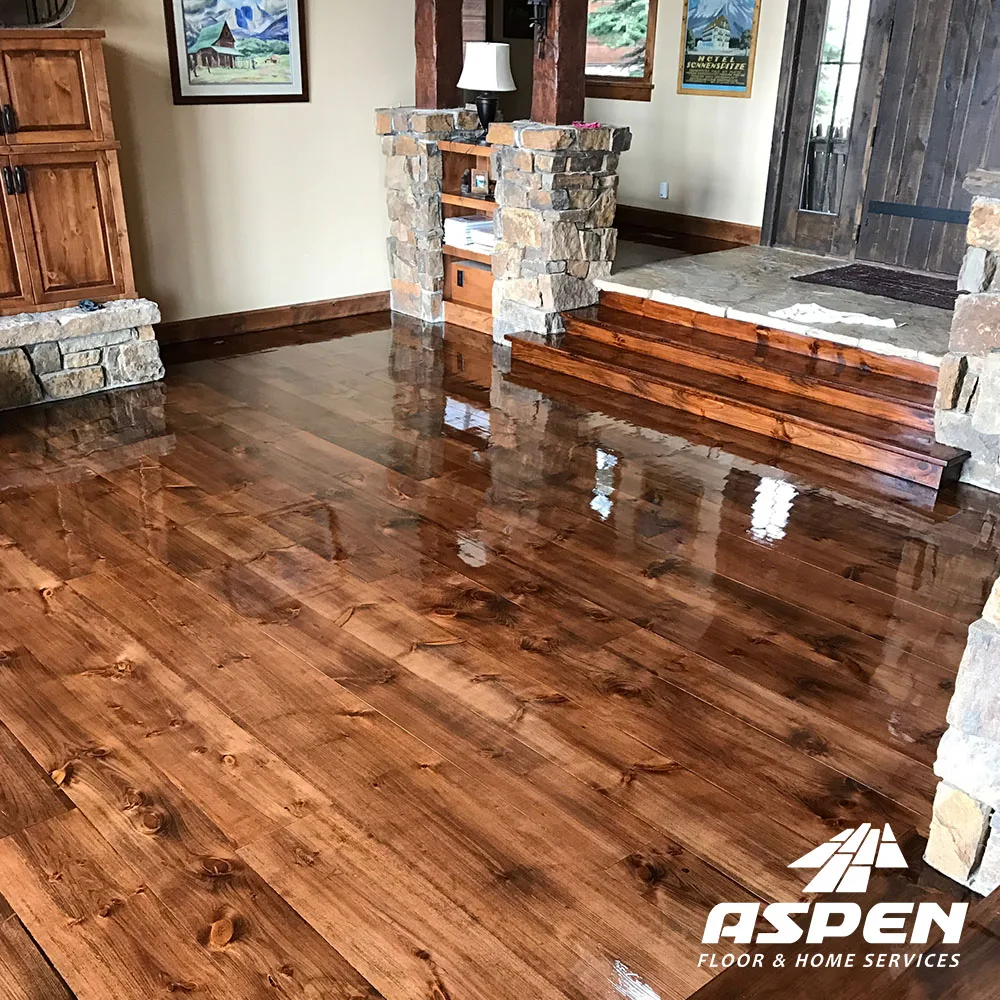
Hardwood floors can last for decades, but their appearance changes over time. Scratches accumulate, high-traffic areas become dull, finishes wear down, and a color that once worked for your home may eventually feel outdated.
For many homeowners, the obvious question is whether their floors can be restored instead of replaced.
Then comes another concern:
What about all the dust?
Traditional hardwood floor sanding is often associated with a messy process and extensive cleanup. Homeowners may worry about fine dust spreading to nearby rooms, settling on furniture, or making an already disruptive home project feel even more complicated. That is why searches for dustless hardwood floor refinishing are usually about more than finding a specific sanding method. People are trying to answer several important questions:
- Can my existing hardwood floors actually be restored?
- Will refinishing remove scratches and visible wear?
- How much dust will sanding create inside my home?
- Is “dustless” really dust-free?
- Will I need to leave my house?
- How long will the project take?
- Is refinishing better than repairing or replacing my floors?
The answer depends on the condition of the wood and the type of restoration the floor needs. For homeowners whose floors are suitable candidates, hardwood floor refinishing in Denver can restore the appearance of worn flooring while giving homeowners the opportunity to update the color and finish.
This guide explains what dustless hardwood floor refinishing actually means, what problems it can address, how the process works, and when another solution may be more appropriate.
What is Dustless Hardwood Floor Refinishing?
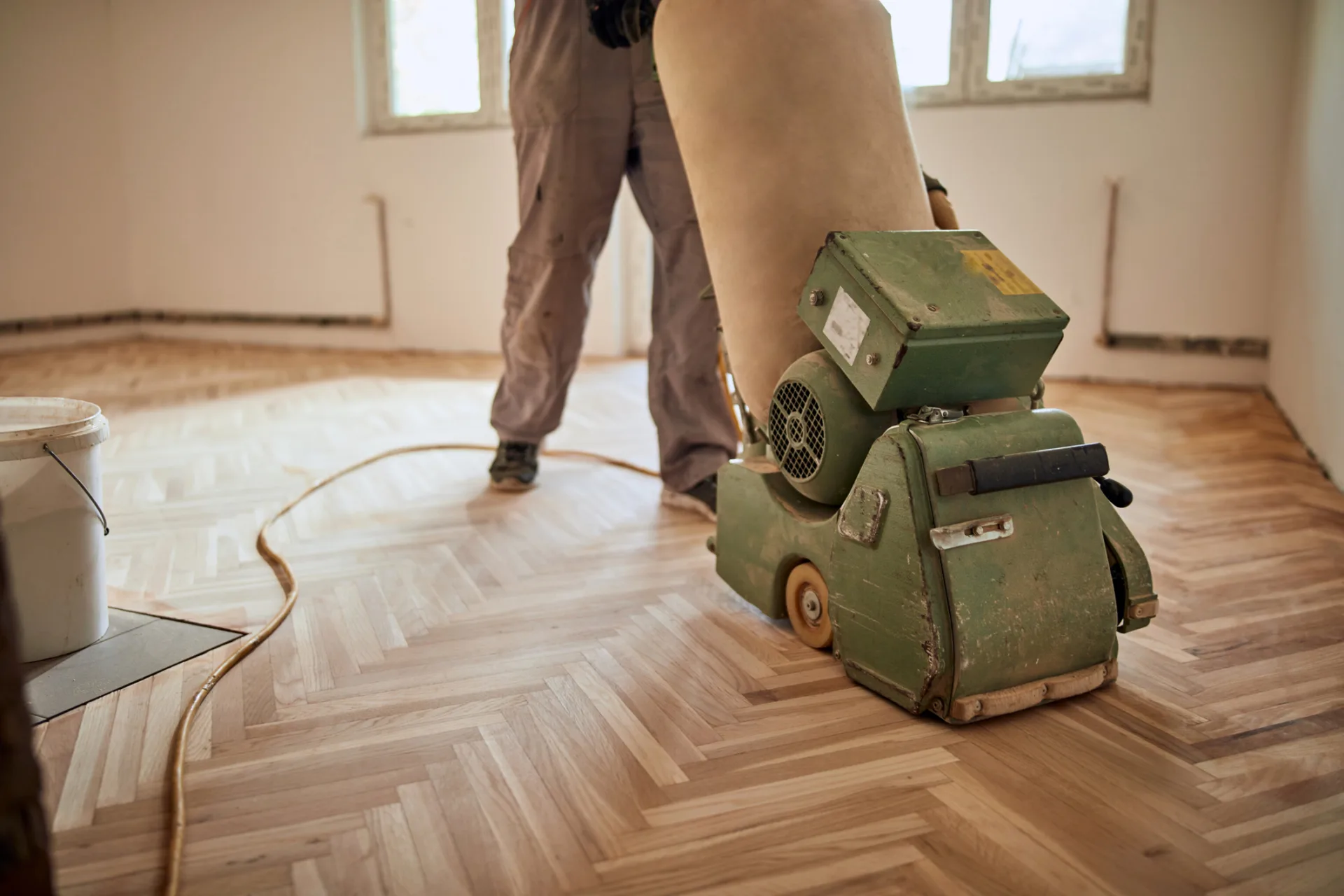
Dustless hardwood floor refinishing is an advanced refinishing method that utilizes innovative equipment and techniques to minimize dust and debris during the refinishing process. Unlike traditional sanding methods that generate clouds of dust, dustless refinishing employs powerful vacuums and containment systems to capture dust at the source, keeping your home cleaner and healthier throughout the refinishing process.
What Problems Can Dustless Hardwood Floor Refinishing Fix?
One of the biggest mistakes homeowners can make is assuming that every damaged-looking hardwood floor needs to be replaced.
In many cases, the wood itself may still be structurally sound while the surface has simply become worn over time. However, not every problem can be solved by sanding and refinishing.
The first question should always be
- What is actually wrong with the floor?
The answer determines whether refinishing, repair, or replacement is the most appropriate solution.
Surface Scratches and Everyday Wear
Everyday life can leave visible marks on hardwood floors.
Common sources of wear include:
- Foot traffic
- Pets
- Moving furniture
- Dropped objects
- Shoes
- Everyday use
If scratches are primarily affecting the finish or the upper surface of a suitable hardwood floor, refinishing may improve the overall appearance.
The appropriate process depends on the depth of the damage and the condition of the flooring.
Dull or Worn Hardwood Floor Finishes
High-traffic areas often wear differently from the rest of the room.
You may notice:
- Dull pathways
- Loss of sheen
- Uneven appearance
- Areas where the finish has worn significantly
- Bare wood beginning to appear
The National Wood Flooring Association explains that the appropriate treatment depends on the condition of the floor. In some cases, a maintenance coat may be sufficient. Floors with more significant damage or exposed bare wood may require a complete sand and refinish. National Wood Flooring Association guidance on refinishing floors
For homeowners with worn finishes and floors that are appropriate candidates for restoration, professional hardwood floor refinishing may be the right next step.
Outdated Hardwood Floor Colors
Sometimes the floor is in reasonably good condition, but the color no longer works with the rest of the home.
A complete sanding and refinishing process can provide an opportunity to:
- Refresh the existing color
- Go lighter
- Go darker
- Update the appearance of the wood
- Coordinate flooring with a larger renovation
According to the NWFA, sanding a floor back to raw wood can provide an opportunity to change the color of the flooring. National Wood Flooring Association guidance on refinishing floors
Uneven Appearance and High-Traffic Areas
Entryways, hallways, kitchens, and living spaces often experience more wear than other areas of the home.
Over time, this can create an uneven appearance where some parts of the floor still look relatively new while other sections look worn.
A professional assessment can help determine whether the floor needs:
- Maintenance
- Refinishing
- Localized repair
- A more extensive restoration approach
The Bottom Line: Refinishing Works Best When the Problem Is Primarily at the Surface
Dustless hardwood floor refinishing is designed to address floors where restoration is appropriate.
If the flooring is structurally sound but scratched, dull, worn, or visually outdated, refinishing may restore its appearance without automatically replacing the entire floor.
How Does Dustless Hardwood Floor Refinishing Work?
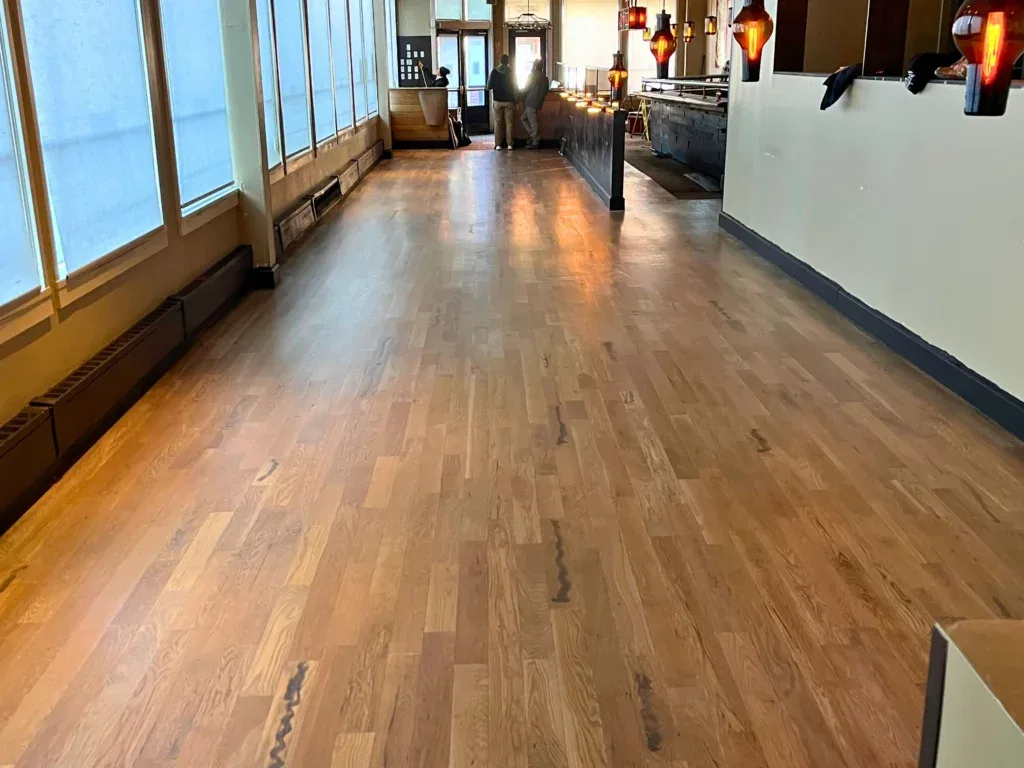
The exact process can vary based on the condition of the floor, the scope of the project, and the desired result. However, professional refinishing generally follows a structured process.
Step 1: Inspect the Condition of Your Hardwood Floors
Before sanding begins, the flooring should be evaluated.
A professional assessment may examine:
- Surface scratches
- Finish wear
- Dents and gouges
- Stains
- Water damage
- Loose or damaged boards
- Previous repairs
- Areas of exposed wood
- Overall floor condition
This step is essential because not every floor requires the same treatment. The NWFA distinguishes between floors that may be suitable for maintenance and floors requiring a complete sand and refinish. NWFA refinishing guidance
Step 2: Prepare the Work Area
Preparation depends on the specific project.
Homeowners may need to plan for:
- Furniture removal
- Removing area rugs
- Protecting personal belongings
- Access to the work area
- Pets
- Temporary changes to household routines
Your contractor should provide instructions based on your home’s layout and the actual scope of work.
Step 3: Sand Away the Existing Finish
When full refinishing is necessary, sanding removes the existing finish and prepares the wood for restoration.
This is not simply a cosmetic step.
The sanding process can affect the final appearance of the floor and requires attention to:
- The condition of the wood
- Appropriate sanding techniques
- Surface consistency
- Edges and detailed areas
- Preparation for stain and finish
The NWFA recommends working with a qualified flooring professional for sanding and refinishing. NWFA refinishing guidance
Step 4: Capture Dust at the Source
This is where the term “dustless refinishing” becomes important. Sanding naturally produces wood dust. Dust-containment systems are designed to capture a substantial amount of that dust during the sanding process rather than allowing it to spread freely through the work environment.
OSHA identifies source capture through local exhaust ventilation as an important engineering approach for controlling wood dust in woodworking operations. OSHA wood dust control guidance
However, homeowners should understand an important distinction:
“Dustless” does not necessarily mean that every project produces absolutely zero dust.
The amount of residual dust can depend on the following:
- Equipment
- System maintenance
- Floor layout
- Edge and detail work
- Work-area preparation
- Project conditions
A better question to ask a contractor is the following:
“How do you capture and manage dust throughout the sanding process?”
Step 5: Complete Necessary Repairs
Some floors need more than refinishing alone.
Damaged boards, loose sections, gouges, or other issues may need to be addressed before sanding and refinishing can begin.
In these situations, professional hardwood floor repair services may be part of the overall restoration plan.
The correct approach depends on the condition of the actual flooring. Refinishing should not be presented as a universal solution for every hardwood floor problem.
Step 6: Apply a New Stain or Color, If Desired
Once the floor has been properly prepared, homeowners may have the opportunity to change its appearance.
Depending on the project, this may include the following:
- Keeping a similar color
- Refreshing an existing tone
- Choosing a lighter appearance
- Selecting a darker stain
- Updating the floor during a larger home renovation
Color results can vary based on the wood species and the condition of the flooring.
Step 7: Apply a Protective Finish
After preparation and staining, a protective finish is applied when applicable.
The finish can affect:
- Appearance
- Sheen
- Ongoing maintenance
- Drying and curing requirements
Your contractor should explain the finish system being used and provide project-specific care instructions.
Step 8: Allow Proper Drying and Curing Time
A refinishing project does not end the moment the final coat is applied.
Drying and curing requirements can vary based on:
- The finish system
- Number of coats
- Temperature
- Humidity
- Manufacturer instructions
Ask your contractor for specific guidance about:
- When you can walk on the floor
- When furniture can return
- When rugs can be replaced
- When the room can return to normal use
Dustless vs. Traditional Hardwood Floor Sanding: What’s the Difference?
The biggest difference is not necessarily whether the floor is sanded. The difference is primarily how the sanding dust is managed.
| Factor | Traditional Sanding Without Effective Dust Containment | Dust-Containment Sanding |
| Dust management | More dust may escape into the work area | Designed to capture dust during sanding |
| Source capture | May be limited | Collection equipment captures dust near the source |
| Cleanup | More loose sanding debris may require cleanup | Designed to reduce released sanding debris |
| Full refinishing | Can be part of the process | Can be part of the process |
| Guaranteed zero dust | No | No responsible contractor should guarantee zero dust |
Is Dustless Refinishing Really 100% Dust-Free?
Not necessarily. The term generally describes a process designed to reduce and capture sanding dust.
It should not automatically be interpreted as a guarantee that no dust particles will remain anywhere in the home.
The quality of dust management can depend on the equipment, the process, and how the work is performed.
Does Dustless Refinishing Deliver the Same Type of Restoration?
Yes, dust containment can be part of a complete sanding and refinishing process. That is an important distinction from sandless refinishing.
Dustless and sandless are not the same thing. A floor that requires complete sanding due to significant scratches, damage, or exposed wood may still be refinished with a dust-containment system.
If you are considering full restoration rather than a surface-level maintenance service, explore Aspen’s hardwood floor refinishing services in Denver to understand which approach may be appropriate for your floors.
Which Option Is Better for Your Home?
The answer depends on:
- Your floor’s current condition
- The depth of the damage
- Whether repairs are needed
- Whether full sanding is necessary
- Your desired appearance
- Your concerns about sanding dust
A professional assessment can help determine the appropriate approach.
Dustless Hardwood Floor Refinishing for Denver Homes
For many Denver homeowners, the biggest question is simple:
“Can my existing hardwood floors be restored instead of replaced?”
If the flooring is structurally sound but scratched, dull, worn, or visually outdated, refinishing may be a practical option.
However, every floor is different.
The right process depends on:
- The condition of the wood
- The depth of scratches or damage
- Whether the finish is worn
- Whether repairs are needed
- Previous refinishing
- The desired final appearance
That is why the best first step is understanding what your floors actually need.
For homeowners considering hardwood floor refinishing in Denver, Aspen Floor & Home Services can evaluate the condition of the flooring and help determine whether dustless refinishing is the appropriate solution.
Ready to Restore Your Hardwood Floors?
If your floors are scratched, dull, worn, or ready for an updated appearance, you may not need to automatically replace them. The right solution starts with understanding the actual condition of your hardwood floors. Contact Aspen Floor & Home Services to request a professional hardwood floor assessment and estimate.