
Choosing a wood flooring trend isn’t just about picking a color you like in a photo — it’s about matching that trend to your room, your climate, and how you’ll install or refinish it. This guide covers the 2026-2027 trends, then shows you how to apply them to your home, whether you’re installing new floors or updating what you already have
What’s Trending in Wood Flooring for 2026-2027
Design-wise, the direction for the next couple of years is consistent across the industry. Wide planks (7 to 12 inches) continue replacing the narrow 2¼-inch strip flooring that dominated for decades. Color is shifting away from the cool gray tones common from 2015 to 2023—multiple 2026 trend reports, including Forbes and House Digest, now list cool gray among the first colors designers are retiring—in favor of warmer honey, caramel, and chestnut tones. Finishes lean matte or low-sheen with a light wire-brushed texture, and herringbone or chevron patterns are showing up more often in these warm tones instead of the stark black-and-white palettes of a few years ago
Step 1: Match the Trend to the Room
Main Living Areas and Entry Levels
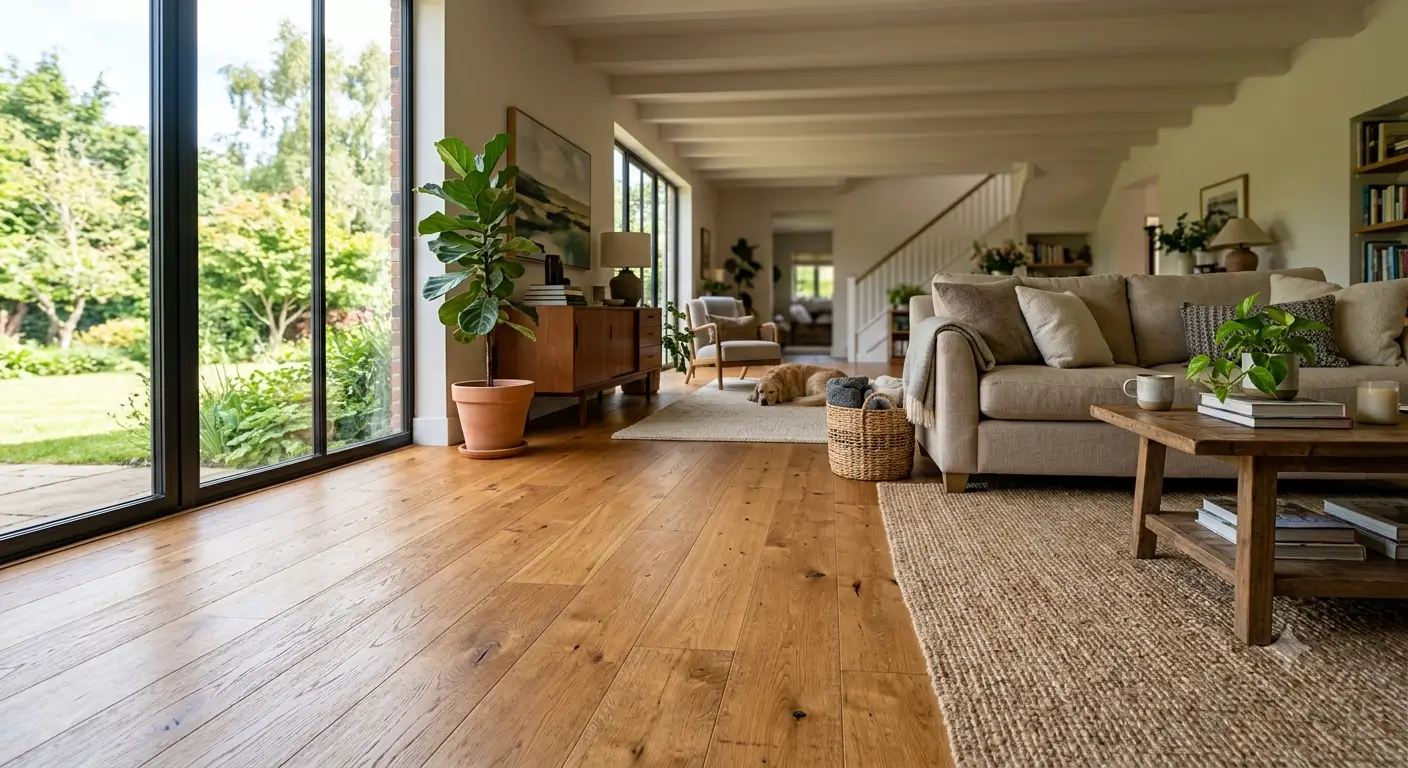
This is where the 2026-2027 trends show up best — wide planks, warm tones, and textured finishes all read well in high-visibility spaces. If you’re starting from scratch, our hardwood floor installation team handles everything from material selection to the final finish, and our guide on what Denver homeowners should know about engineered hardwood is a good next read if you’re deciding between solid and engineered for this space.
Basements and Below-Grade Spaces
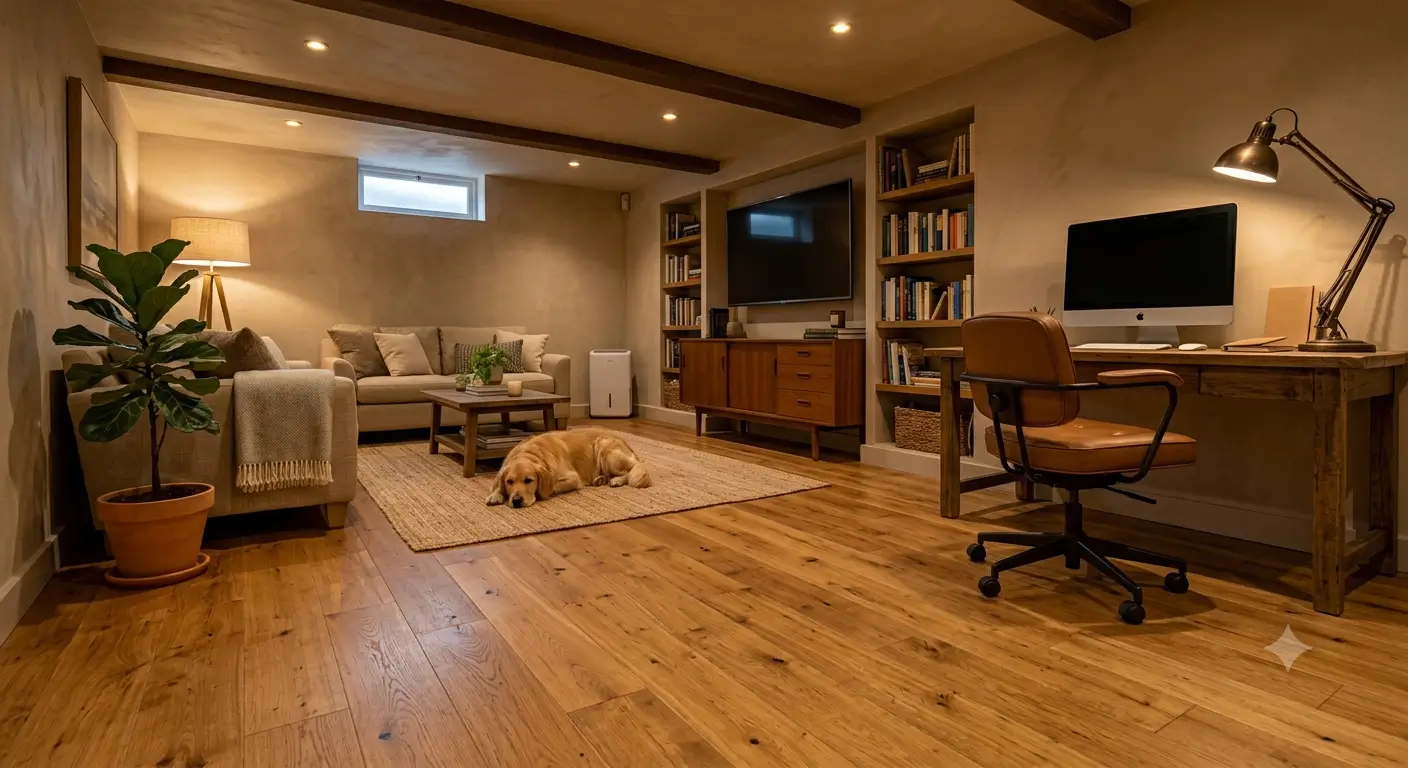
Solid hardwood is rarely the right call below grade—the moisture swings make engineered flooring with a stable core essential, close to mandatory, especially in Denver (more on why below). If moisture has already damaged a floor, start with our guide on repairing water-damaged hardwood floors instead of assuming you need a full replacement.
Step 2: Choose Your Color Range
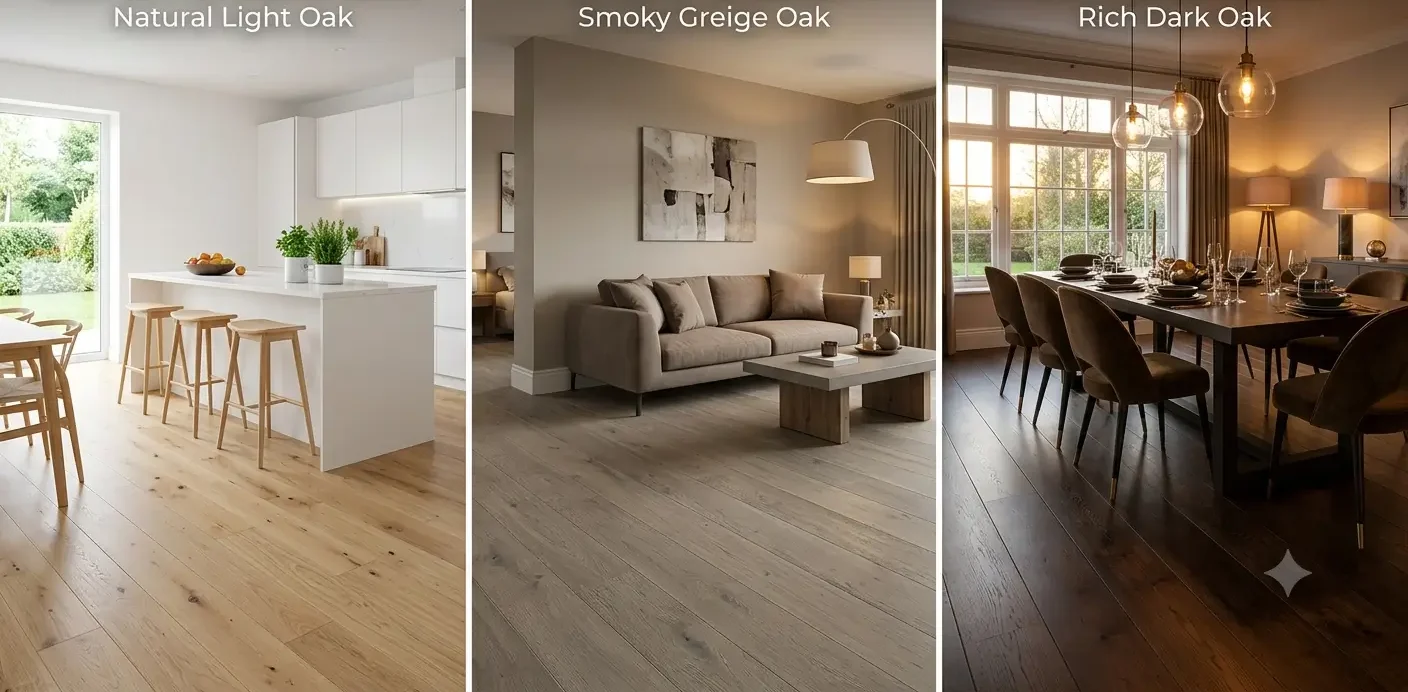
Light Natural Oak
The safest choice for resale value and brightness, and the dominant 2026 trend. If you’re weighing species and finish options for this look, our guide on the best type of wood flooring for Denver homeowners breaks down the options before you install.
Smoky Greige
A middle ground between the outgoing cool gray look and the warmer tones taking over in 2026—and one of our most popular refinishing requests from homeowners updating an existing floor’s color instead of replacing it.A middle ground between the outgoing cool gray look and the warmer tones taking over in 2026—and one of the most popular refinishing requests we get from homeowners updating an existing floor’s color rather than replacing it.
Rich, Dark Stains
Dramatic and high-end-looking, but gaps between boards show up far more visibly against a dark stain, since the exposed wood edge at the gap reads as a light line against the dark surface. If you want a dark floor here, humidity control isn’t optional (more on that below). Going dark is also one of our most requested refinishing color changes—our oak refinishing guide walks through that process and what that process looks like on an existing floor.
Step 3: Match It to Your Interior Style
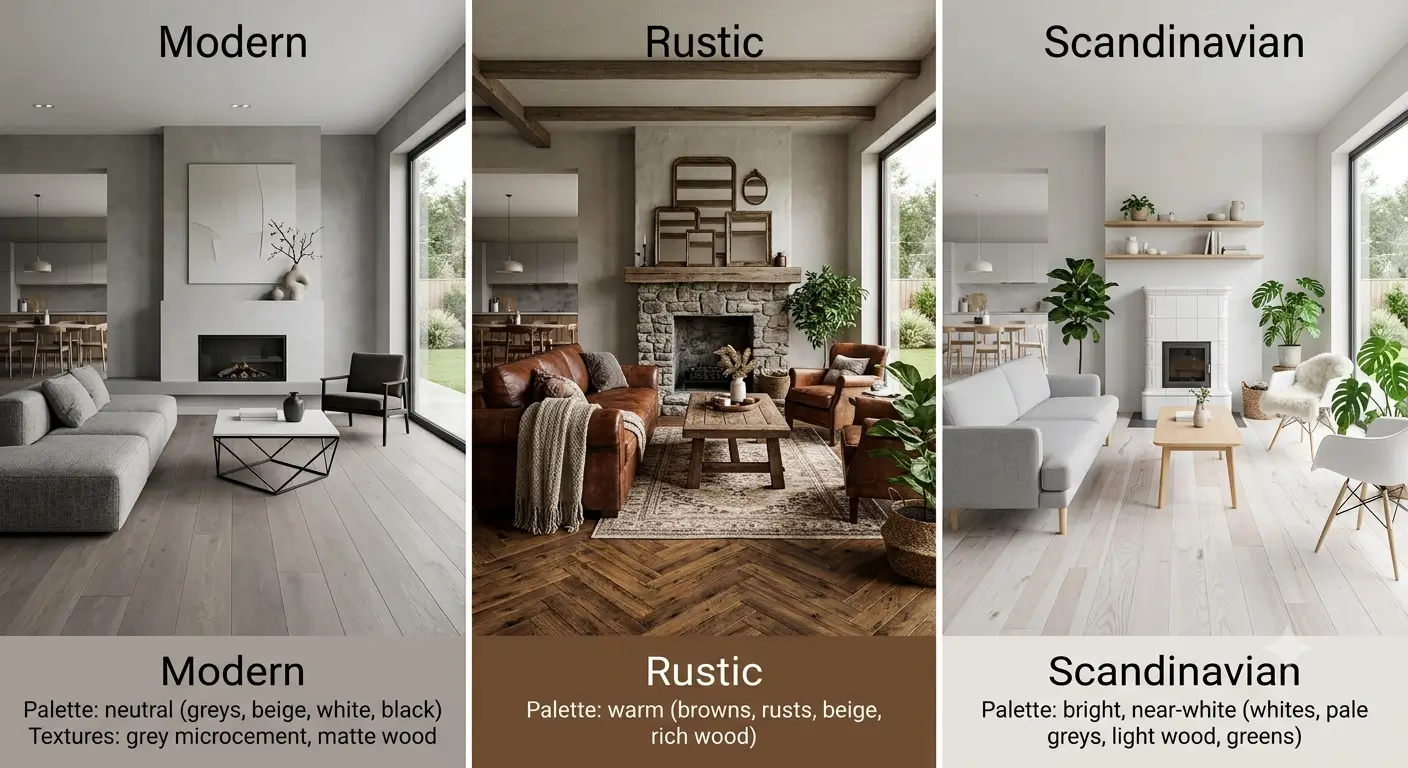
Modern
Wide planks, matte finishes, and minimal texture pair well with modern interiors.
Rustic
Character-grade wood with visible knots and grain, wire-brushed texture, and oversized herringbone or chevron layouts suit rustic spaces.
Scandinavian
LightVery light, almost whitewashed oak tones with an invisible matte finish and mixed-width planks fit a Scandinavian look.
One Thing Denver Homeowners Can’t Skip: Humidity
Whatever trend, room, and color you land on, one factor decides whether it actually holds up: humidity. On some winter days, National Weather Service climate records for the Denver area show outdoor relative humidity dropping into the high teens by mid-afternoon. That’s already low — and indoor air gets drier still, because most Denver homes heat with forced-air furnaces.
Why Forced-Air Heat Is the Real Culprit
Forced-air heat doesn’t add any moisture back into the air — it just keeps cycling increasingly dry air through the house all winter. In a typical Denver home with no supplemental humidification, indoor relative humidity can sit well under 30% for weeks at a time. That’s what causes gapping: the wood shrinks as it loses moisture, and small gaps open between boards. Come a wet spring or a humid stretch, the wood reabsorbs moisture and can cup or crown instead. Homeowners often think something went wrong with the installation — most of the time, it’s the humidity swing, not the workmanship.
The NWFA’s 30-50% Rule
The National Wood Flooring Association’s official installation guidelines call for indoor relative humidity to stay between 30% and 50%, with wood moisture content around 6-9%, for a floor to perform as designed and for most manufacturer warranties to remain valid. This is exactly why our installation process includes acclimating the wood and checking humidity conditions before a single board goes down — and why a whole-home humidifier is essential here, not a luxury add-on. is close to a requirement here, not a luxury add-on.
Solid vs. Engineered: Which Fits Your Choice?
Engineered hardwood has become the default recommendation for most Denver homes, not just a budget alternative to solid wood. Built in cross-layered plies with a hardwood wear layer on top, it resists the expansion and contraction that comes with Denver’s humidity swings far better than a solid plank does, which is why it holds up better in basements, over concrete slabs, and in homes without tight humidity control. Our hardwood flooring installers’ team can walk you through which option fits the room, color, and style you chose above, and our comparison of laminate vs. engineered wood flooring is worth a look if budget is part of the decision.
One detail worth asking about before you buy: wear layer thickness. Engineered floors with a thin wear layer (around 2mm) usually can’t be sanded and refinished more than once, if at all. A thicker wear layer — 4mm or more — can typically handle two or three refinishing cycles over its life, which matters if you’re planning to update the finish later instead of replacing the whole floor.
Already Have Hardwood? Restore Instead of Replace
If your existing hardwood is showing its age—a dated finish, minor scratches, or a color that no longer matches the 2026-2027 trends above—a full replacement often isn’t necessary; it usually isn’t the first option worth considering. Our dustless hardwood floor refinishing service can update the color and finish of an existing solid or thick-wear-layer engineered floor without the cost, mess, or downtime of a full tear-out and install. Our complete guide to dustless refinishing and our screen vs. sand comparison both go deeper into which refinishing method fits your floor’s condition.
Frequently Asked Questions About Wood Flooring in Denver
What is the best hardwood flooring for Colorado?
Engineered hardwood in white oak, hickory, or maple is generally the best fit, since its layered core resists the expansion and contraction caused by Denver’s dry, high-altitude climate better than solid wood does.
What are the trends in hardwood flooring for 2026?
The 2026-2027 trends we’re seeing most on Denver installs and refinishing jobs: wide planks (7 to 12 inches), warm tones like honey, caramel, and chestnut replacing cool gray, matte or low-sheen wire-brushed finishes, and oversized herringbone or chevron patterns. If you want a recommendation suited to your specific home, call us at (720) 320-5873 or fill out the form for an online free consultation.
Are light or dark hardwood floors in for 2026?
Light, warm tones are dominant, though darker woods are reappearing in select spaces looking for more drama. Cool gray, on the other hand, is clearly on its way out. Since the right pick depends on your rooms, lighting, and personal style, at Aspen Floor & Home Services, Inc, we offer free consultations tailored to your home—call us at (720) 320-5873 or get an online free estimate.
What flooring is outdated?
Cool gray tones top most 2026 design lists as the color to move away from, along with overly glossy finishes.
What color floors never go out of style?
Mid-toned natural wood colors, like honey oak or classic walnut, since they reflect the wood’s natural color rather than chasing a passing stain trend.
Should your flooring be darker or lighter than your walls?
A floor slightly darker than the walls tends to visually ground a room, while a lighter floor pairs with almost any wall color and can make smaller spaces feel larger. If you’d like guidance based on your actual walls and lighting, call us at (720) 320-5873 or get a free, personalized consultation.
Does light or dark wood look more expensive?
Both can, depending on execution—but in a dry climate like Denver’s, dark floors need more consistent humidity control to avoid visible gapping, so keeping that ‘expensive’ look over time takes a bit more upkeep than it does with a lighter floor.
Is white oak or hickory more durable for pets and kids?
Hickory (about 1,820 lbf on the Janka hardness scale) is roughly 34% harder than white oak (about 1,360 lbf), making it more dent-resistant against heavy foot traffic, claws, and dropped toys. White oak’s more uniform grain hides fine scratches better, though, and hickory’s natural color variation can camouflage everyday wear between refinishings. After installing both species in hundreds of Denver homes with pets and kids, our team typically recommends an engineered version with a wear layer of at least 4 mm, and our guide to Colorado’s most scratch-resistant hardwood floors covers a few more options worth considering. Bring us your household’s situation during a free in-home consultation, and we’ll help you pick the right one.
Ready to Move Forward?
Whether you’re installing new hardwood or refinishing what you already have, contact us for a free in-home consultation — we’ll help you land on the trend, color, and finish that actually holds up in a Denver home.