You can repair most hardwood floor damage for $478–$1,624, saving you thousands compared to full floor replacement costs of $2,480–$7,028. In this guide, we’ll show you how to tackle common problems in your Colorado home, from scratches to water damage—and how to tell when a repair is safe to do yourself versus when it’s worth calling in a pro. Learning how to fix hardwood floor damage the right way protects your investment and keeps small problems from turning into full replacements.
Quick decision guide: Surface scratches, light dents, and small seasonal gaps are usually safe to DIY. Water damage, warping or buckling, subfloor issues, or damage across three or more boards almost always need a professional. Not sure which camp your floor is in? A quick look at our professional hardwood floor repair services near you in the Denver metro will tell you whether it’s a weekend fix or a job for the experts. Either way, knowing how to fix hardwood floor damage early saves money.
How to Fix Hardwood Floor Damage: Understanding the Different Types in Colorado Homes
Before you can effectively fix hardwood floor damage, it helps to identify exactly what type of damage you are dealing with. Beautiful hardwood flooring adds significant value to your Colorado home. Despite their durability, everyday wear, accidents, or moisture exposure can damage hardwood floors over time. First and foremost, you’ll need to understand what you’re dealing with before successfully restoring your damaged wood floors.
| Type of Damage | Visual Signs | Common Causes | DIY Repair Difficulty |
|---|---|---|---|
| Fine Scratches | Faint lines, superficial | Furniture, pet nails, sand | Easy |
| Deep Scratches | Visible gouges in the wood | Heavy objects, furniture dragging | Moderate |
| Water Damage | Cupping, crowning, and discoloration | Leaks, spills, and humidity | Moderate to Difficult |
| Dents | Compressed wood fibers | Heavy impacts, furniture | Moderate |
| Gaps | Visible spaces between boards | Seasonal changes, improper installation | Moderate |
| Warping | Boards lifting or buckling | Excessive moisture | Difficult |
How to Fix Scratched Hardwood Floors Without Professional Help
Quick Methods for Repairing Light Scratches on Hardwood
Light scratches are the easiest way to fix hardwood floor damage at home. Knowing how to fix hardwood floor damage from scratches is the most common DIY win for homeowners. You can easily repair light scratches that haven’t penetrated through the finish on your Denver hardwood floor.
- First, thoroughly clean the area with a hardwood floor cleaner
- Next, apply a scratch repair solution with a soft cloth
- Finally, if you notice multiple fine scratches, consider applying a hardwood floor polish to refresh the entire area
Bruce Flooring experts confirm this approach: “The repair process is relatively straightforward for minor scratches, gouges, and small dents. Start by cleaning the damaged area to remove dirt and debris.”
Professional-Grade Techniques for Addressing Deep Scratches
For deeper marks, the techniques to fix hardwood floor damage require a bit more patience. When scratches penetrate the wood itself, you’ll need to follow these steps for proper hardwood scratch repair:
- First, thoroughly clean the damaged area
- Then, apply wood filler that matches your floor color using a putty knife
- After that, allow it to dry completely (usually 24 hours)
- Next, gently sand the area with fine-grit sandpaper
- Subsequently, apply a matching stain if needed
- Finally, finish with a coat of polyurethane that matches your floor’s existing finish
Pro Tip: Always test any stain or finish on an inconspicuous area first to ensure it matches your existing floor. If your scratches turn out to run deep across a wide area, it may be faster to look at how deep gouges in a hardwood floor get repaired by hand before you commit a whole afternoon to it.
Best Methods for Removing Dents and Gouges from Hardwood Flooring
When you fix hardwood floor damage caused by dents and gouges, the goal is to lift and blend the affected area. For more serious damage where wood fibers appear compressed or missing, these wood floor repair techniques work best:
- First, completely clean the dent area
- For clean dents (without missing wood):
- Begin by placing a damp cloth over the dent
- Then, apply a warm iron over the cloth for 30 seconds
- As a result, the steam will help raise compressed wood fibers
- For gouges with missing wood:
- Start by filling with wood filler or epoxy filler
- Next, let it dry completely
- Then, sand it smooth with fine-grit sandpaper
- Finally, apply a matching stain and finish
Floor Factors experts recommend this approach: “You can fix minor splits and fractures with epoxy (wood glue) and filler. Fill the crack with epoxy, then apply the filler to help conceal it.”
Fixing Water-Damaged Hardwood Floors in Colorado
To fix hardwood floor damage from water, you must address moisture before any cosmetic repair. Water damage is the most serious threat to Colorado hardwood floors, and speed determines the outcome: boards that dry out within the first 48 hours have a far higher chance of recovery than those left to sit. Move fast — pull up all standing water with towels or a wet-dry vacuum, run fans and dehumidifiers, and check for any sign of mold before it spreads.
Because water often hides in the subfloor and quietly causes cupping or buckling weeks later, this is the one repair where a wrong DIY call gets expensive fast. If you want the full process laid out, our walkthrough on repairing water-damaged hardwood floors in Colorado’s climate covers assessment, drying, and refinishing in detail. And when the damage reaches more than a few boards, or you suspect the subfloor is wet, it’s worth getting a professional wood floor water damage repair assessment in the Denver area before the problem compounds.
How to Replace Damaged Hardwood Floor Boards Like a Professional
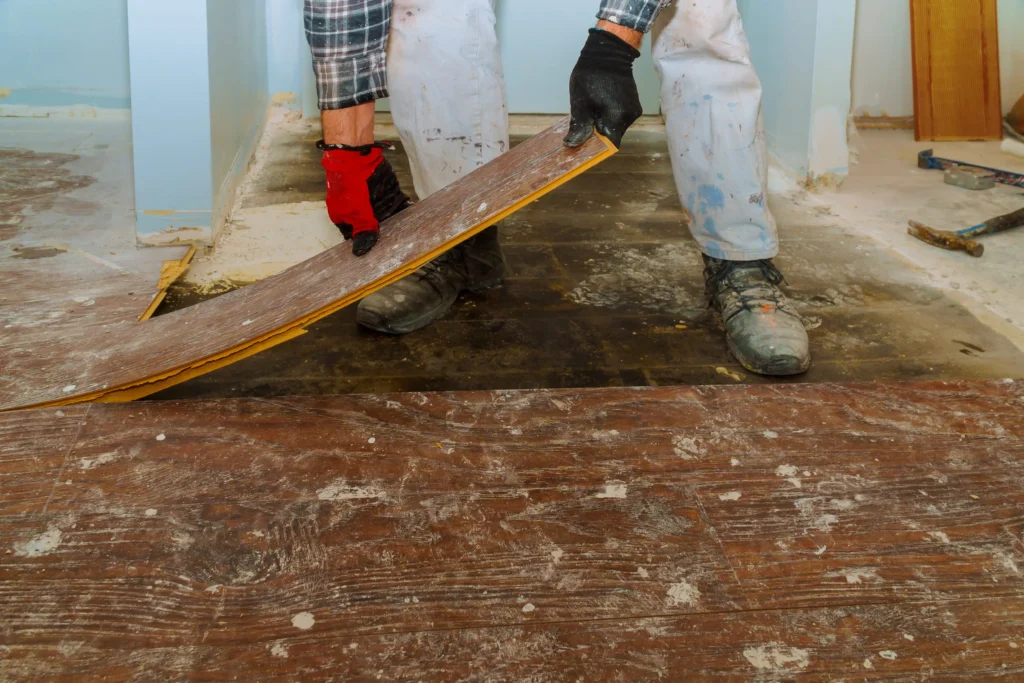
Sometimes the only way to fix hardwood floor damage is to replace a board entirely. When individual boards suffer beyond repair, your best option involves replacement for your hardwood floor restoration.
Step-by-Step Process for Replacing Damaged Wood Floor Boards
- First, identify replacement boards that match (bring a sample to your local flooring store)
- Then, remove the damaged board by:
- Drilling holes along the center of the board
- Using a chisel to split and remove the damaged board
- Thoroughly cleaning the exposed area
- Next, prepare the replacement board by removing the bottom groove
- After that, apply wood glue to the subfloor
- Subsequently, install the new board
- Finally, sand, stain, and finish to match the surrounding floor
Affordable Solutions for Fixing Gaps in Hardwood Flooring
Follow these steps to fix hardwood floor damage by swapping out a ruined board. You can fix hardwood floor damage from seasonal gaps affordably with the right filler and timing. While seasonal gaps in your Thornton and Denver metro hardwood flooring occur normally due to humidity changes, persistent gaps may require your attention — especially in Colorado, where winter indoor humidity routinely drops below 15% and pulls boards apart more than in most climates.
For small gaps (less than 1/4 inch):
- First, clean thoroughly
- Then, apply wood filler specifically designed for flooring
- Next, remove the excess and allow to dry
- Finally, sand smooth and apply a matching finish
For larger gaps:
- Consider wood strips that you can glue into place
- In extreme cases, you might need a board replacement. If your boards keep separating every winter no matter what you fill them with, it’s usually a humidity issue worth raising during a hardwood floor repair consultation with a local Denver specialist, since chronic gapping rarely fixes itself.
Expert Tips for Refinishing Hardwood Floors After Repairs
Refinishing is the final step when you fix hardwood floor damage and want a seamless, uniform look. After completing repairs, you might need to refinish part or all of your Front Range hardwood floor.
How to Spot Refinished, Repaired Areas of Wood Flooring
- First, lightly sand the repaired area with fine-grit sandpaper
- Then, thoroughly clean and remove all dust
- Next, apply stain to match (if needed)
- After that, apply thin coats of finish, allowing proper drying time between coats
- Finally, lightly buff between coats for a smooth finish
When to Consider Complete Hardwood Floor Refinishing
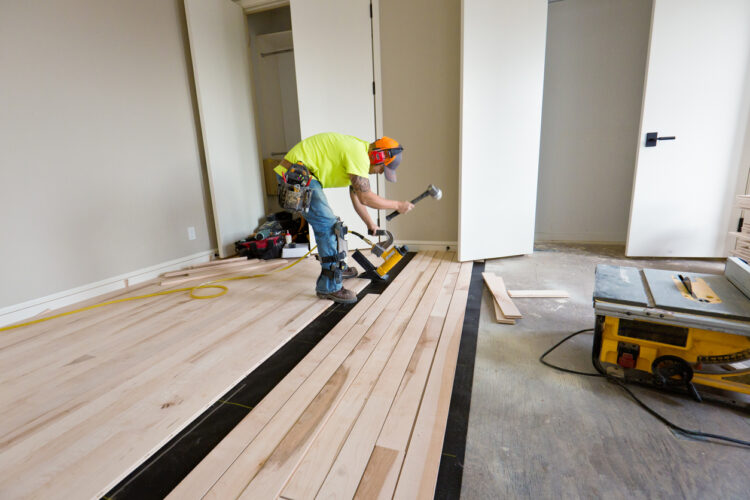
For multiple repairs or an inconsistent appearance, booking professional hardwood floor refinishing in Denver, Colorado, is usually your best option. This typically involves:
- First, sanding the entire floor
- Then, staining if desired
- Finally, applying multiple coats of protective finish
For deeper guidance on wood moisture, acclimation, and care standards, the National Wood Flooring Association publishes industry best practices that complement the repair methods above.
Essential Preventive Maintenance for Colorado Hardwood Floors
The best way to avoid having to fix hardwood floor damage later is consistent preventive maintenance. Keep your Colorado hardwood floors looking beautiful with these wood floor maintenance tips:
- Always use appropriate floor cleaners specifically designed for hardwood
- Strategically place rugs at entrances to catch dirt and moisture
- Consistently use felt pads under furniture
- Regularly keep your pet’s nails trimmed
- Maintain indoor humidity between 35% and 55%
- Immediately clean up spills
When to Call a Professional Hardwood Floor Repair Specialist in Colorado
Some situations are too severe to fix hardwood floor damage yourself and call for a professional. While you can handle many repairs yourself, some situations are better left to a team that does hardwood floor repair near you across the Denver metro every day:
- Extensive water damage affecting multiple boards
- Structural issues or subfloor damage
- Large areas needing refinishing
- Historical or exotic wood floors
- Lack of proper tools or experience
As local Colorado wood flooring experts, we recommend a professional assessment when:
- Damage extends beyond 3-4 boards
- Your floor shows signs of mold or mildew
- Damage has existed for more than a few weeks
- You feel unsure about matching your existing floor
Frequently Asked Questions About Hardwood Floor Repair
Can I fix water-damaged hardwood floors myself, or do I need a professional?
These common questions about how to fix hardwood floor damage cover what Colorado homeowners ask most. Minor surface water and light cupping can sometimes dry out and recover on their own. But once boards buckle, mold appears, or the subfloor gets wet, Aspen Floor & Home Services recommends a professional repair, because hidden moisture keeps spreading and a DIY patch often costs more to redo than the original professional fix would have.
How much does it cost to repair hardwood floor damage in Denver?
Most hardwood floor repairs in the Denver area run between $478 and $1,624, compared to $2,480 to $7,028 for a full replacement. The final price depends on damage type, how many boards are affected, and whether the floor needs refinishing afterward. Aspen Floor & Home Services provides free, no-obligation estimates so homeowners know the cost before any work begins.
Why does my hardwood floor have gaps in the winter?
Colorado’s winter indoor humidity often drops below 15%, far lower than the 35–55% wood prefers. As the wood loses moisture it shrinks, pulling boards apart and creating visible seasonal gaps. Many of these gaps close again in summer. Aspen Floor & Home Services helps Denver-area homeowners tell normal seasonal movement from gaps that signal a real problem.
Can you repair just one damaged board without refinishing the whole floor?
Yes. A single damaged board can usually be removed and replaced, then sanded, stained, and finished to blend with the surrounding floor. Aspen Floor & Home Services performs this kind of spot board replacement regularly for Denver-area homeowners, which avoids the cost and disruption of refinishing an entire room when only one area is affected.
How long should water-damaged hardwood dry before repair?
Wood should reach a stable moisture content before any repair begins, which can take several days to a few weeks depending on severity and airflow. Rushing repairs on still-damp wood causes cupping, crowning, and failed finishes. Aspen Floor & Home Services uses moisture meters to confirm Denver-area floors are truly dry before starting restoration.
What causes hardwood floors to cup or buckle in Colorado?
Cupping happens when the underside of a board absorbs more moisture than the top, raising the edges; buckling is the severe stage where boards lift off the subfloor. In Colorado, swings between dry winters and sudden water exposure make this common. Aspen Floor & Home Services traces the moisture source first, since repairs fail if the cause isn’t fixed.
Does homeowners insurance cover water-damaged hardwood floors?
It often depends on the cause. Sudden, accidental damage like a burst pipe is frequently covered, while gradual leaks and long-term humidity usually are not. Aspen Floor & Home Services documents the damage thoroughly for Denver-area homeowners filing a claim, which can make the difference in what an insurer agrees to pay.
Conclusion: Preserving Your Investment in Colorado Hardwood Flooring
With the right techniques and materials, you can complete many DIY hardwood floor repairs yourself — light scratches, small dents, and minor gaps are all within reach for a careful homeowner. But for water damage, structural issues, or anything spread across several boards, working with an experienced hardwood floor repair specialist serving Denver and the surrounding metro ensures the job is done once and done right.
Ready for professional help with your hardwood floor repair in Denver? Our team of Colorado flooring experts is just a call away. We proudly serve Denver, Thornton, Westminster, Arvada, Broomfield, and the entire Denver metro area with specialized hardwood repair and refinishing services.